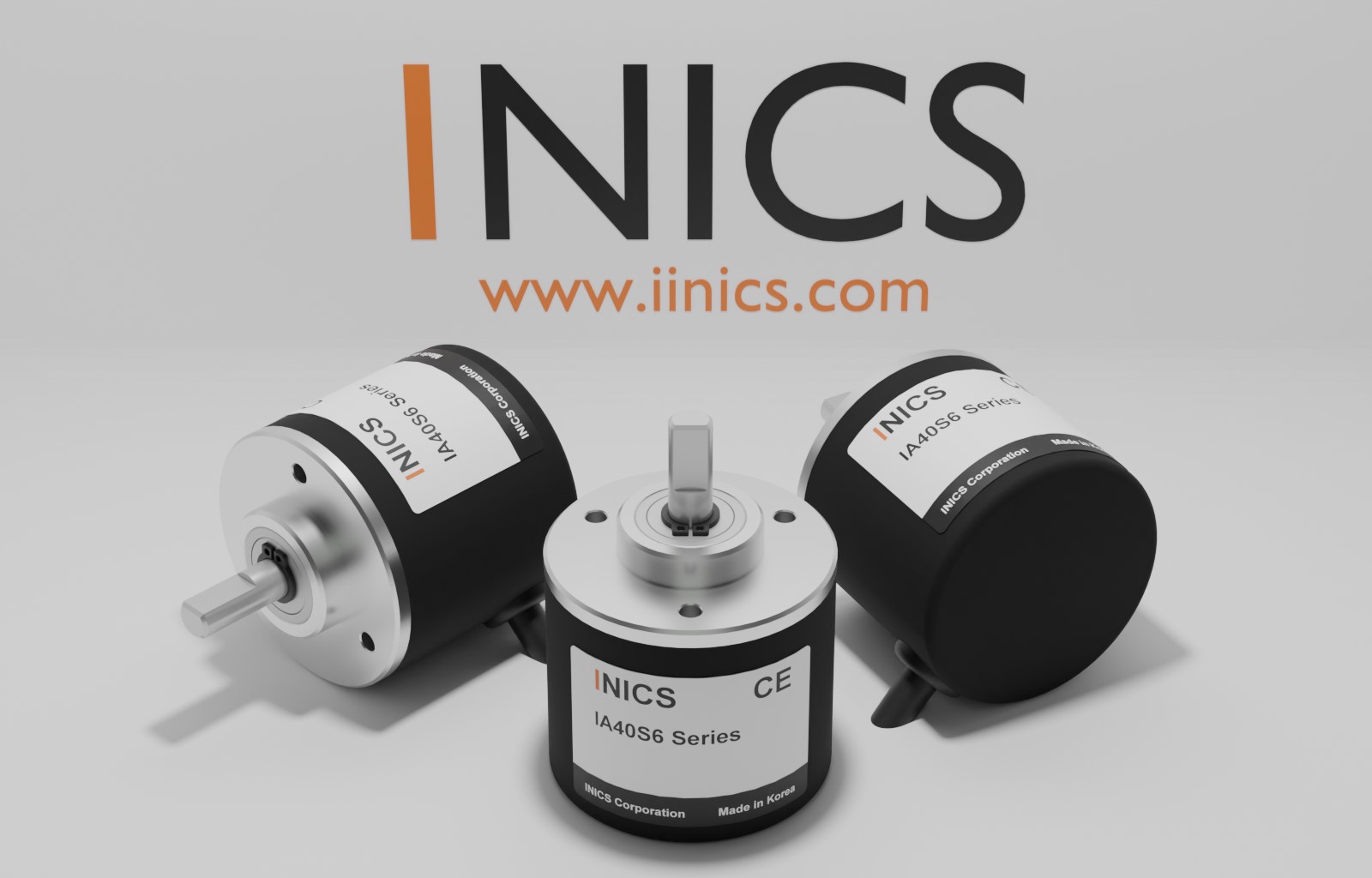
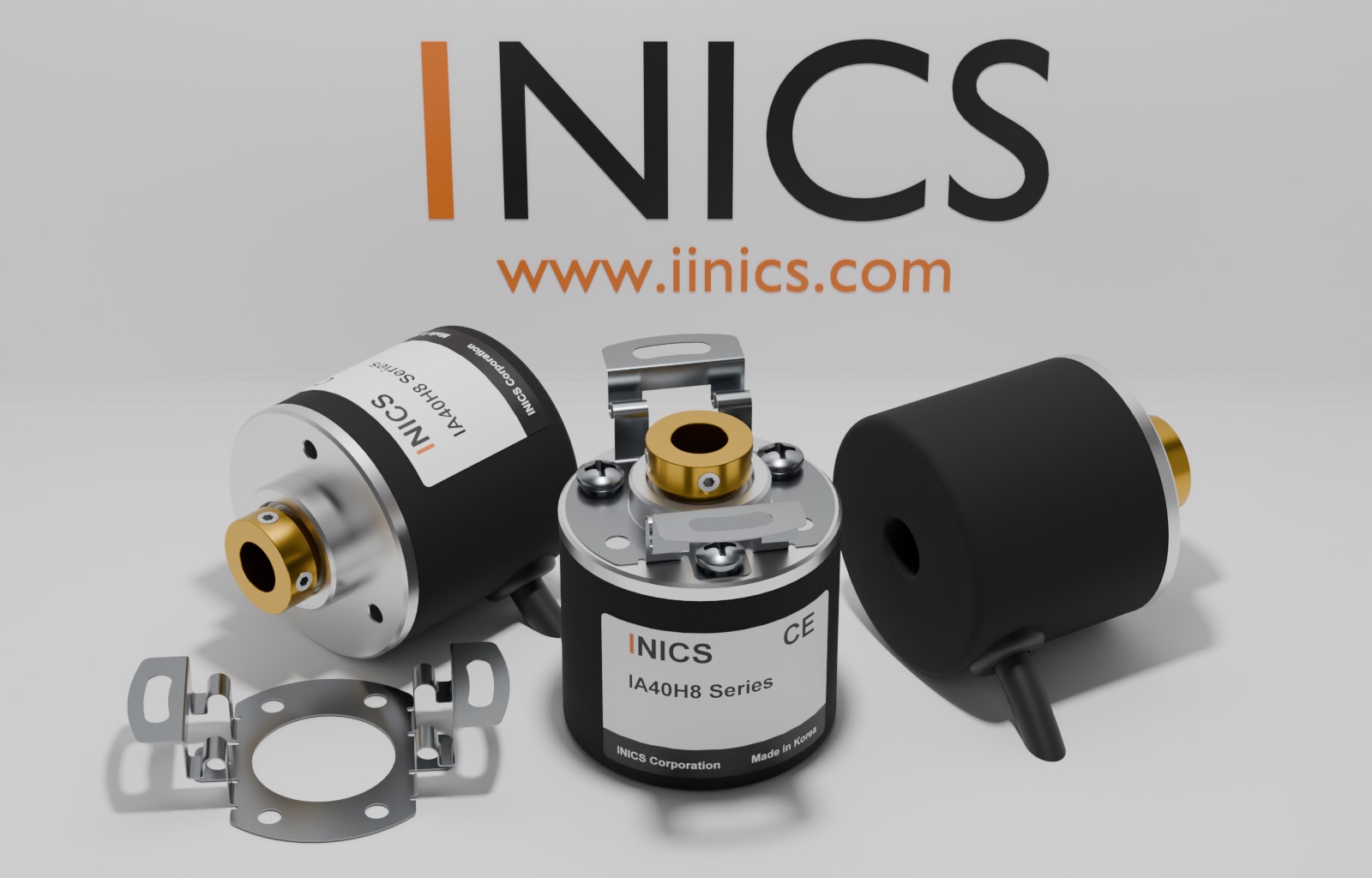
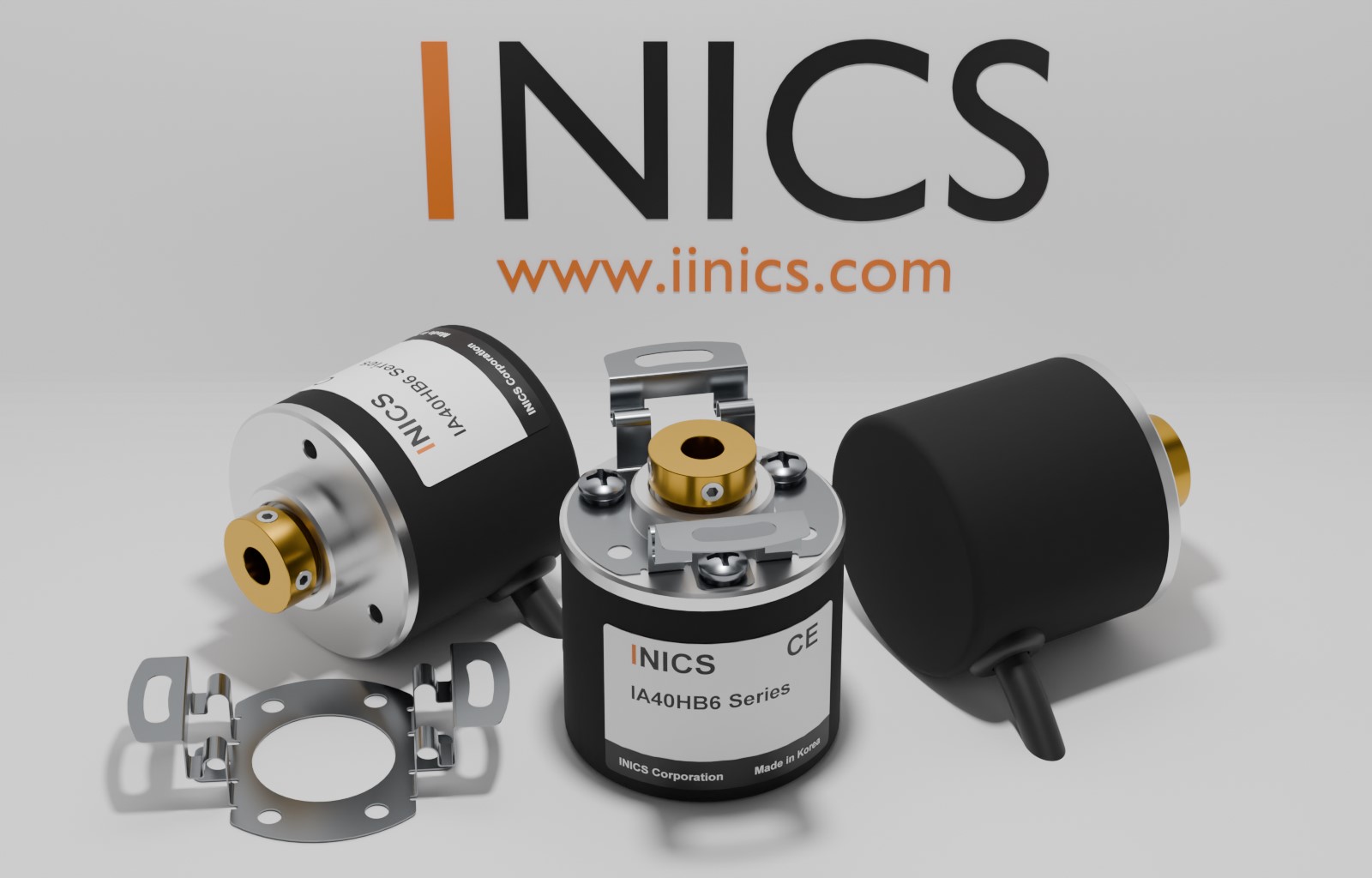
An inductive absolute encoder based on electromagnetic induction.
No optical parts, strong immunity to external magnetic fields —
built for contaminated and humid environments. Three housings:
shaft, fully-open hollow and closed-end built-in.
4,096 P/R
Max. Resolution
16,384 REV
Multi-turn
5,000 RPM
Max. Speed
±1 LSB
Hysteresis
Key Features
FEATURE 01
Absolute Position Detection
Every angle outputs a unique code — the position is known the moment
power is applied. No homing sequence, no position loss after
a power interruption.
FEATURE 02
Immune to Magnetic Interference
Electromagnetic induction keeps readings stable next to motors and
magnetic chucks. No optical parts — durable, and built for
contaminated, humid environments.
FEATURE 03
Binary / Gray Code
Gray code changes only one bit at a time, eliminating misreads
from bit delays. Count direction is selectable (F: CW up / R: CCW up).
BINARYGRAYF / R
FEATURE 04
Parallel NPN / SSI Line Driver
Parallel NPN outputs 10 bit lines (res. 8–1024); SSI streams up to
4096 P/R over a synchronous line-driver interface at 50k–500 kHz.
FEATURE 05
16,384-Rev Multi-turn (SSI)
SSI adds a 14-bit revolution counter (16,384 turns) on top of the
single-turn angle. Note: the multi-turn count resets to 0 at power off.
FEATURE 06
±1 LSB Hysteresis · Kit Included
±1 LSB hysteresis suppresses code flicker. 50G shock, 5G vibration.
Coupling (shaft) or bracket (hollow/built-in) included.
Aluminum or PA66-GF30 body. CE certified.
Technology · Sensing Principle
Inductive Absolute Sensing
Absolute Position, Free from Magnetic Interference
The rotating rotor pattern modulates the high-frequency field generated by the stator coil, and the induced signal is used to compute the current angle. Because it reads inductive coupling rather than a magnet, absolute position detection is unaffected by external magnetic fields.
Electromagnetic induction sensing — fully non-contact, reading angle from the coupling between coil and rotor pattern.
Immune to external magnetic fields — no permanent magnet, so it runs stably next to motors and magnetic chucks.
Angle = unique code — up to 4,096 positions (12 bit), each with its own code.
SSI multi-turn — 14-bit turn count plus single-turn angle in a single serial frame.